

How are our glaciers doing?
21 March is World Glaciers Day.
Glacier Monitoring in Switzerland (GLAMOS) aims to document glacier changes in Switzerland in the long term. Data are collected systematically, not only on development of surface area and volume, but also on snow accumulation, melting of ice, glacier flow and ice temperatures.
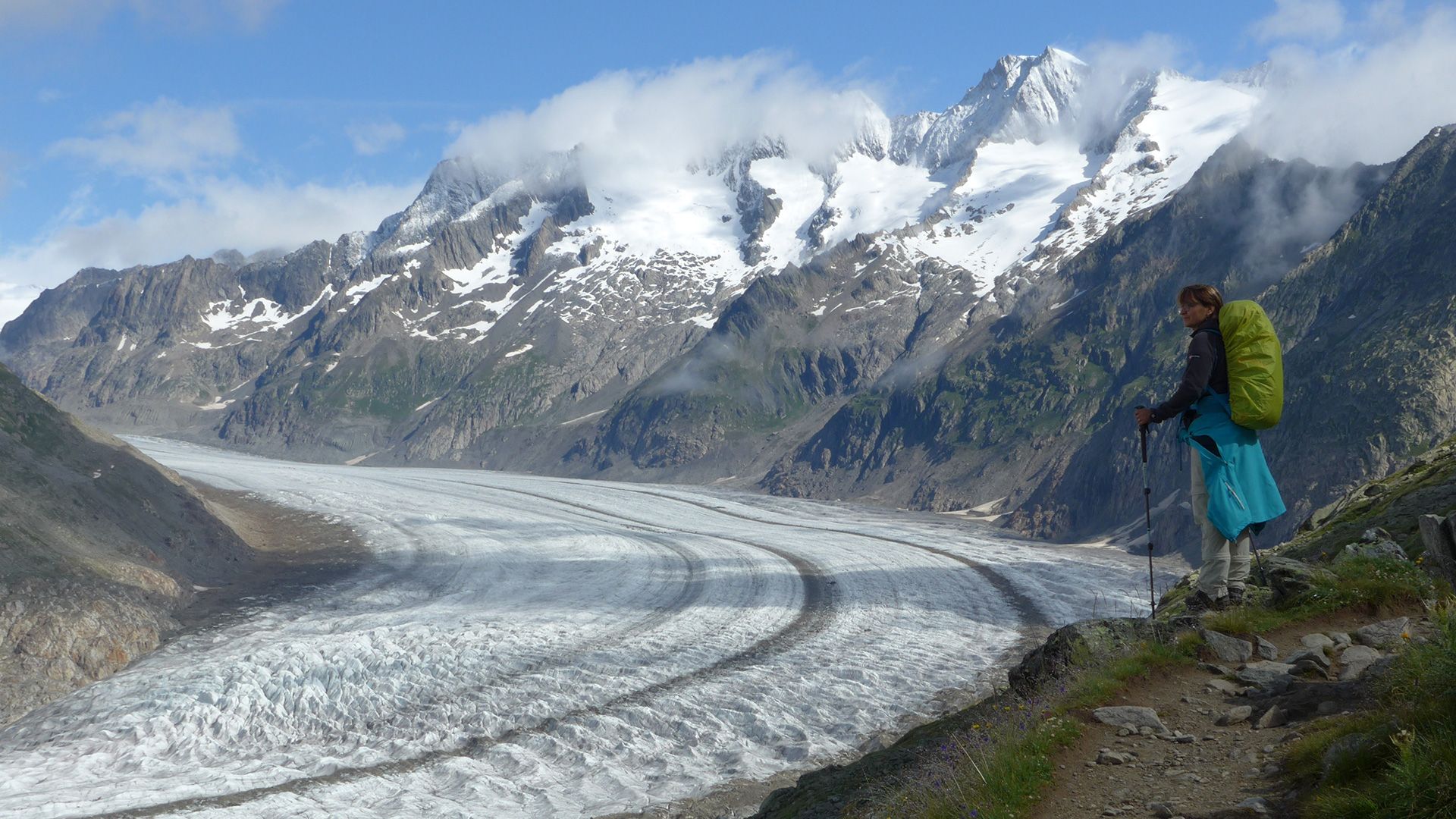
This information is important for understanding the interaction between glaciers and climate. It is used to estimate water resources, natural hazards and future rise in sea level. Glacier inventories include perimeters, surface areas and other measurement parameters for all glaciers at a given time in a specific area. For the Swiss Alps, complete inventories are available for the years 1850 (reconstructed subsequently), 1973, 2010 and 2016 (derived from aerial photographs).
The measurements of changes in length carried out every year at the tongues of more than hundred glaciers provide an overview of the long-term changes in Swiss glaciers. More complex methods are used to measure the mass balance both at the end of winter and in autumn, and the surface movement on selected glaciers (for example, the Great Aletsch, Allalin, Clariden, Basòdino, Giétro, Gries, Plaine Morte, Silvretta glaciers). With the help of data from the Federal Office of Topography, the change in ice volume for a larger number of glaciers at intervals of 5–10 years is determined and a new inventory of all glacier areas is regularly compiled.
Glaciers are traditionally of great scientific and economic interest in Switzerland. Glacier changes are considered one of the best indicators to detect climatic fluctuations. The glaciers as water reservoir play an important role for the economic use (drinking water, power generation). In addition, the decline in glaciers also has a significant impact on tourism, and natural hazards in the mountains (ice avalanches, lake outbursts) are often associated with glaciers.
Further information: www.glamos.ch
Link to the map: map.geo.admin.ch