

How can geodata help protect soils?
Soil is one of the most important production bases in agriculture and must therefore be managed sustainably.
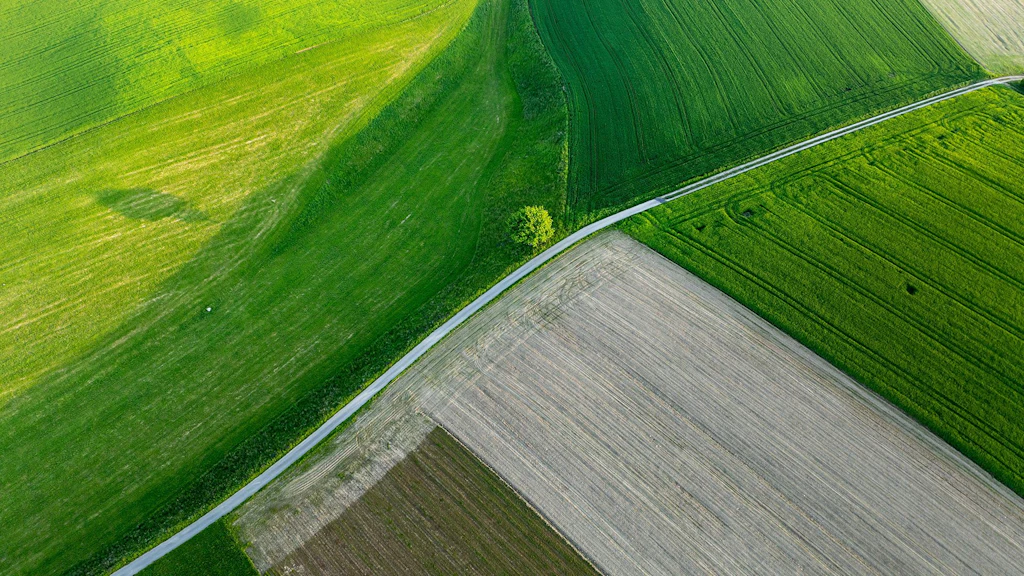
Erosion risk map for arable land in Switzerland in a 2x2-metre grid based on SwissALTI3D and cantonal surface-area data on arable land (status 2021). The map shows the potential qualitative erosion risk. The overall rating is allocated to one of three risk levels (no risk; risk; high risk) without taking account of soil use or management method. The long-term mean soil erosion is calculated on the basis of the universal soil loss equation (USLE).
Link to the map: map.geo.admin.ch
Current Event Related to This Topic
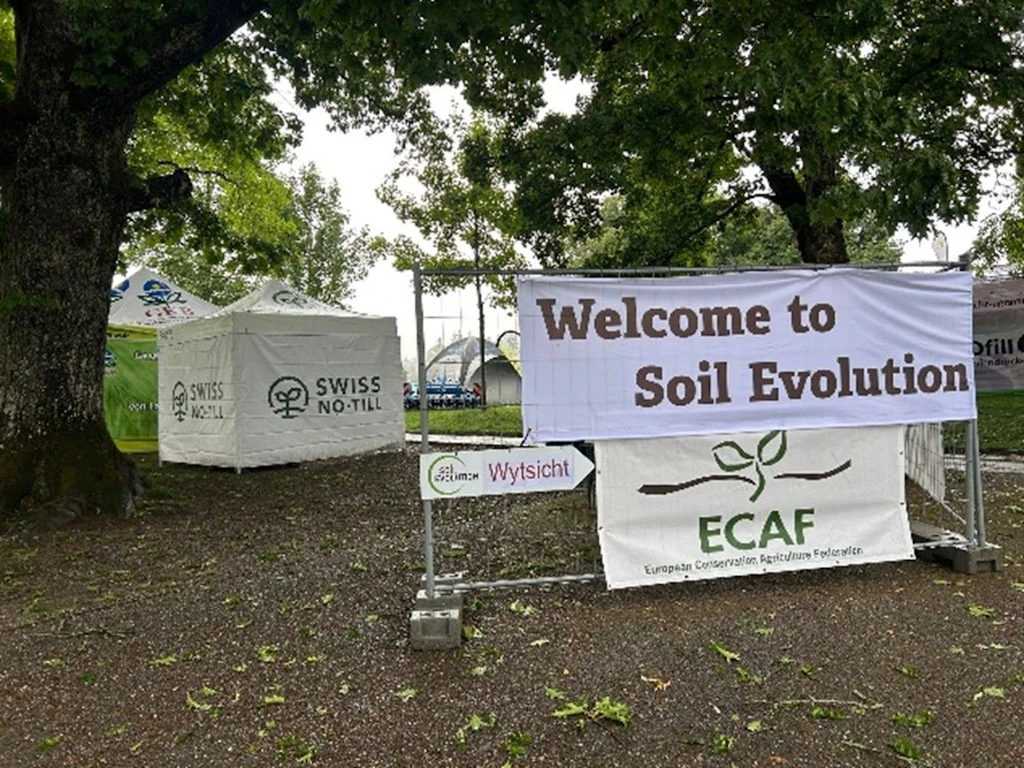
The specialist event on soil fertility and soil regeneration in the German-speaking region.
02.06 – 05.06.2026 in Bern, Gurten (Switzerland)
SWISS NO-TILL is a Swiss association promoting soil-friendly agriculture based on the principle of No-Till (direct seeding), meaning a form of farming in which the soil is disturbed as little as possible, or not at all. Crops are sown directly into existing soil or crop residues in order to preserve soil fertility and reduce issues such as erosion, soil compaction and humus loss.
Founded in 1995 under the name IG NO-TILL and transformed into an association in 2000, its objectives include promoting direct seeding, encouraging knowledge exchange among farmers, sharing expertise and developing sustainable, soil-conserving agricultural practices.
The topic is also highly relevant to geodata and environmental monitoring, as it addresses issues such as soil monitoring, climate adaptation, carbon storage in soils, erosion protection and sustainable land management. In 2025, SWISS NO-TILL celebrated its 30th anniversary and presents itself as a knowledge platform dedicated to soil, under the motto:
Soil has no lobby.
Agricultural perspective:
Soil is regarded as a living ecosystem that should be protected through minimal or no soil disturbance, permanent soil cover and diverse crop rotations. The objective is to improve humus content, biodiversity, water retention and erosion control.
Climate perspective:
No-Till is linked to issues such as CO₂ storage in soils, resilience to drought and heavy rainfall. A key question is how these benefits — especially increases in humus content — can be measured and demonstrated.
Soil data perspective:
Numerous Swiss institutions (FOAG, FOEN, Agroscope, cantons, NABO, etc.) produce data on soils, erosion, agricultural land and soil quality, which can be combined to better understand the effects of agricultural practices.
Geodata perspective:
Geodata such as elevation models, orthophotos, land cover and erosion risk maps make it possible to analyse where certain agricultural practices are most suitable, where risks are highest and how landscapes evolve over time.
Data spaces and registers perspective:
The idea is to connect data from farmers, cantons, federal offices, researchers and economic stakeholders in interoperable systems to reliably demonstrate that sustainable farming practices are genuinely being implemented.
International perspective:
These issues are embedded in broader policies such as the European Green Deal, the Common Agricultural Policy (CAP) and Carbon Farming, under which farmers could potentially be compensated for measurable carbon storage in soils.
No-Till serves as an example showing that future geodata infrastructures will no longer focus solely on answering the question “Where is something located?”, but increasingly also “How does an ecosystem evolve over time?”, by connecting agriculture, climate, soils, biodiversity and data.